
OpsLog – LM&O – 5/27/2026
OpsLog – LM&O – 5/27/2026
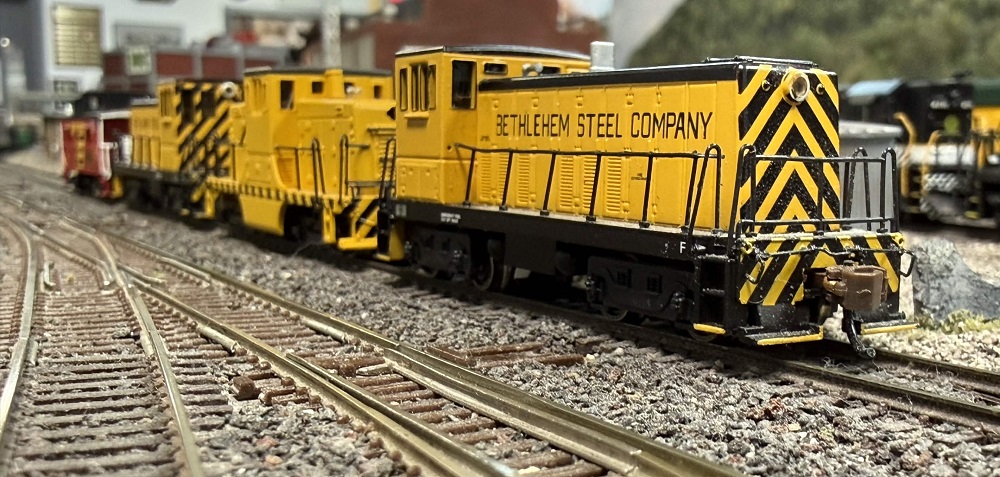
Where I spend my Wednesday, down at the mill (photo: Jim M)
 n the Tuscarora, my micro-layout, you can climb aboard the cab of an eastbound coal train. You’ll rattle out of Westly, cross Tenmile Creek, enter the Tuscarora interlocking plant, whistle at the signpost, look for orders at the tower, cross Morgan Street, loop through the long curve between Inner and Outer industrials, clear town and enter Easton. That’s your run.
You will probably pass a freight train in Tuscarora, same engine, same consist (perhaps progressively shorter) each time. The run takes maybe 30 seconds.
On the Lehigh, Monongahela and Ohio, you’ll board a coal train at Carbon Hill. After doing some work to couple it together and pump the air, you’ll climb the stiff grade to the mainline. Following the waterlevel route, you’ll wend past White Falls, through Zanesville, another tunnel, through Mingo and then dive through Mount Jackson. Then it’s double track main past the Weirton Docks, the horseshoe curve, down past the sprawling Martin Yard and sedate station, then diving into the urban setting of Pittsburgh, crossing two foreign lines before notching up the throttles for a hard climb into the Appalachians. Up, up, up, through the Red Rock division point, a sweeping curve and dizzying trestle and into the high reaches of Harris Glen. Then, setting the brakes you drop down the long grade, corkscrewing through the spiral tunnel, a short span of daylight and another long tunnel, flying over a viaduct and into an interlocking district, past the massive furnaces at Lehigh, watching signals for mill traffic as you queue into Calypso. Of course, if you want the full run, you’ll leave your power there and borrow mill units to run your coal cut back through the interlocking, onto the foundry property and down the long industrial complex. At the far end, you’ll reach the unloading facility. Four hoppers you’ll shift into the power plant, the rest going into the coal dumps. And don’t forget to take your engines back to the Calypso sheds.
I helped (actually more like sherpaed) 415 up the hill and was ordered to not talk about it (Photo Redaction: Jim M)
On this line, you will meet possibly a half-dozen trains, maybe more. You might see five or more locals busy at work. The run can take, I don’t know, 30 minutes (even longer, given who might be dispatching).
This is sixty times the length of Tusk.
The takeaway here is important. Sure, the Tuscarora is fun to run. We all enjoy it. But really, the difference between a micro layout, even your usual home layout, at what we have at the clubhouse is (to quote a certain Sicilian) “Inconceivable”. It’s easy to get jaded about it, especially if there are problems (which, running trains in non-loop fashion for a half-hour, there will be). But it’s massive, bigger than anything you’ll find anywhere in the state. Our runs take longer, our rosters are bigger, our shipping is more complex than anyone else. We come in every Wednesday and see it like we have dozens, hundreds of times before, the rolling view-block hills, the massive cities, the dozens of engines, the hundreds of cars.
And if you turn around in the doorway, you’ll see the the names of dozens of people who joined our club and worked in big (or small) ways to make it even better before passing from life. Design, track laying, scenery, support – countless hours.
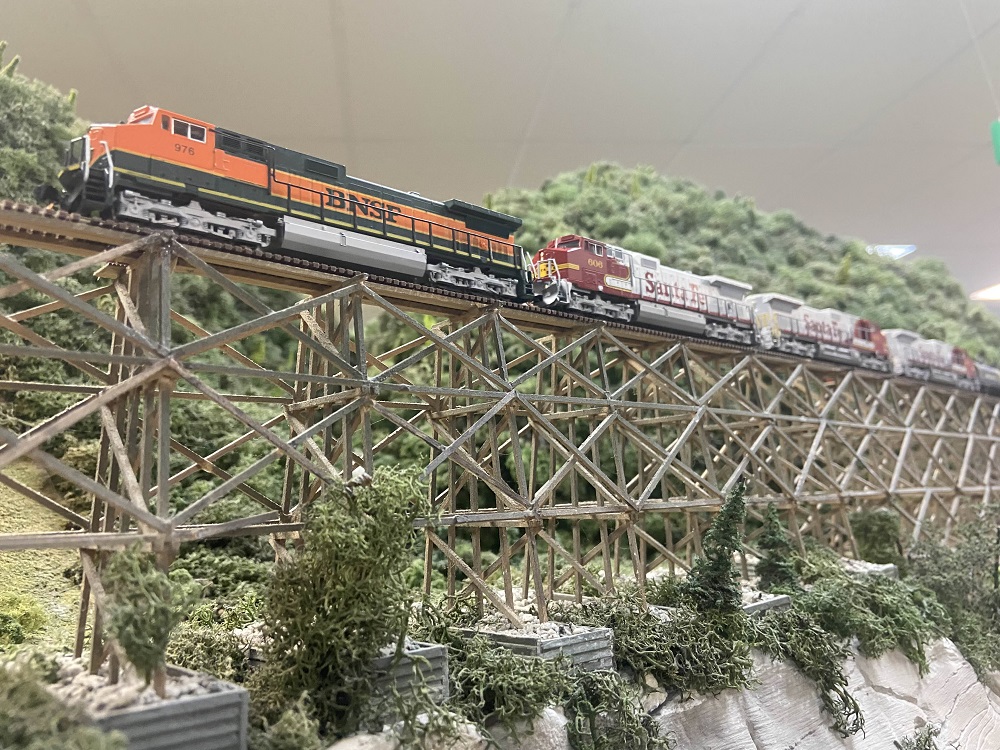
Jeff launches over White Falls, a guest engineer at the controls. Many thanks for giving up your seat on this – you did me a solid (Unredacted photo: Jeff C)
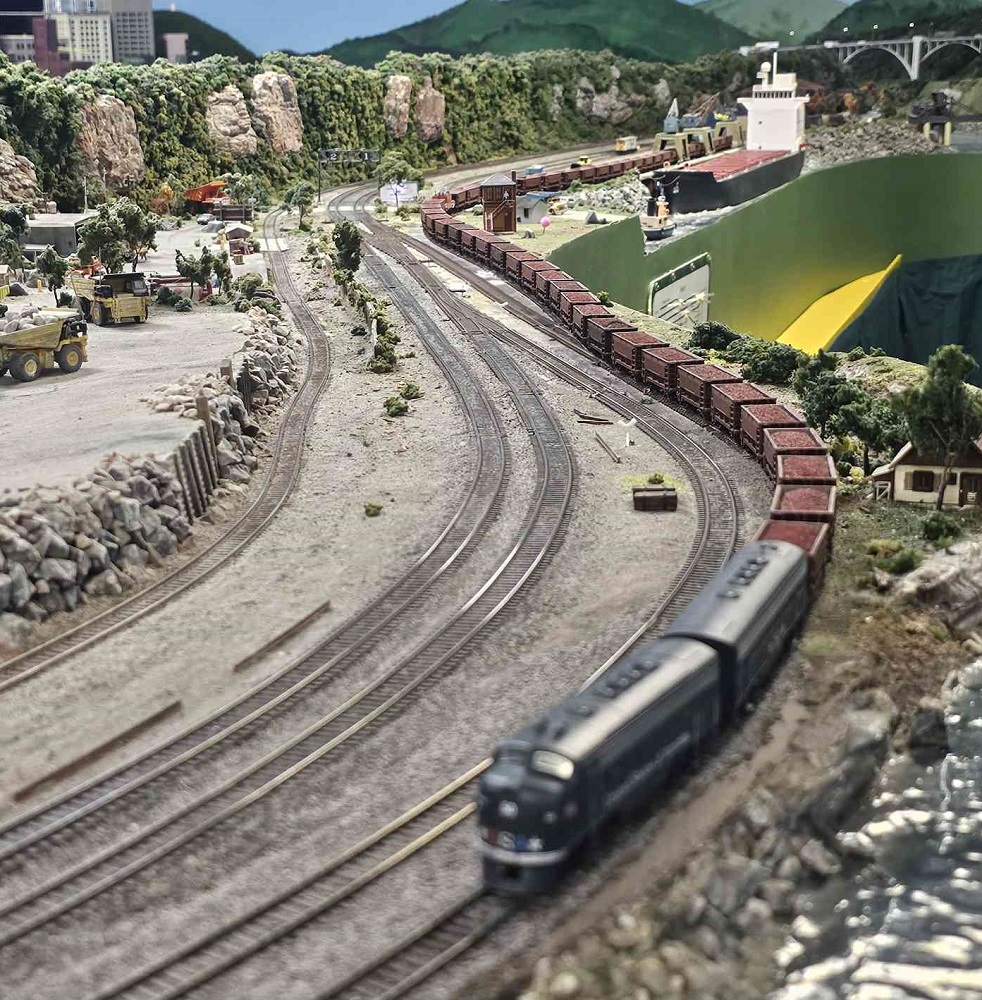
452 East out of Weirton – John ran our ore over and back (John C)
So if you come to the club with a chip on your shoulder, or substandard (or simply bad-lucked) equipment, or feel like chatting about Midway, well, there are at least two dozen people who come to run. Our ops are why our club roster is so huge, how we can afford our building and sectional layout. It’s how people who didn’t know anything about trains other than they go “woo-woo” now know about waybills, warrants, soup tickets, interlocking, timetables. It’s why we are visited by other clubs, to see how we do things. It’s why we are the cornerstone of several operation designs and efforts others have and host.
Operations are our life-blood. It’s our mission statement. It what we effing do.
I’m not going to point out things people did wrong last night. Rather, think about what we did right while getting thirty (counted them) trains over the two subdivisions. Its how we moved (estimated) 175 freight cars, 40 coal hoppers, 40 ore jennies, four passenger trains and burned steel in two furnaces. It took two dispatchers, one interlocking leverman, three yardmasters, one superintendent and (counted them again) seventeen engineers making this happen. It takes six man-hours to card and another six to clean. The session spanned three hours.
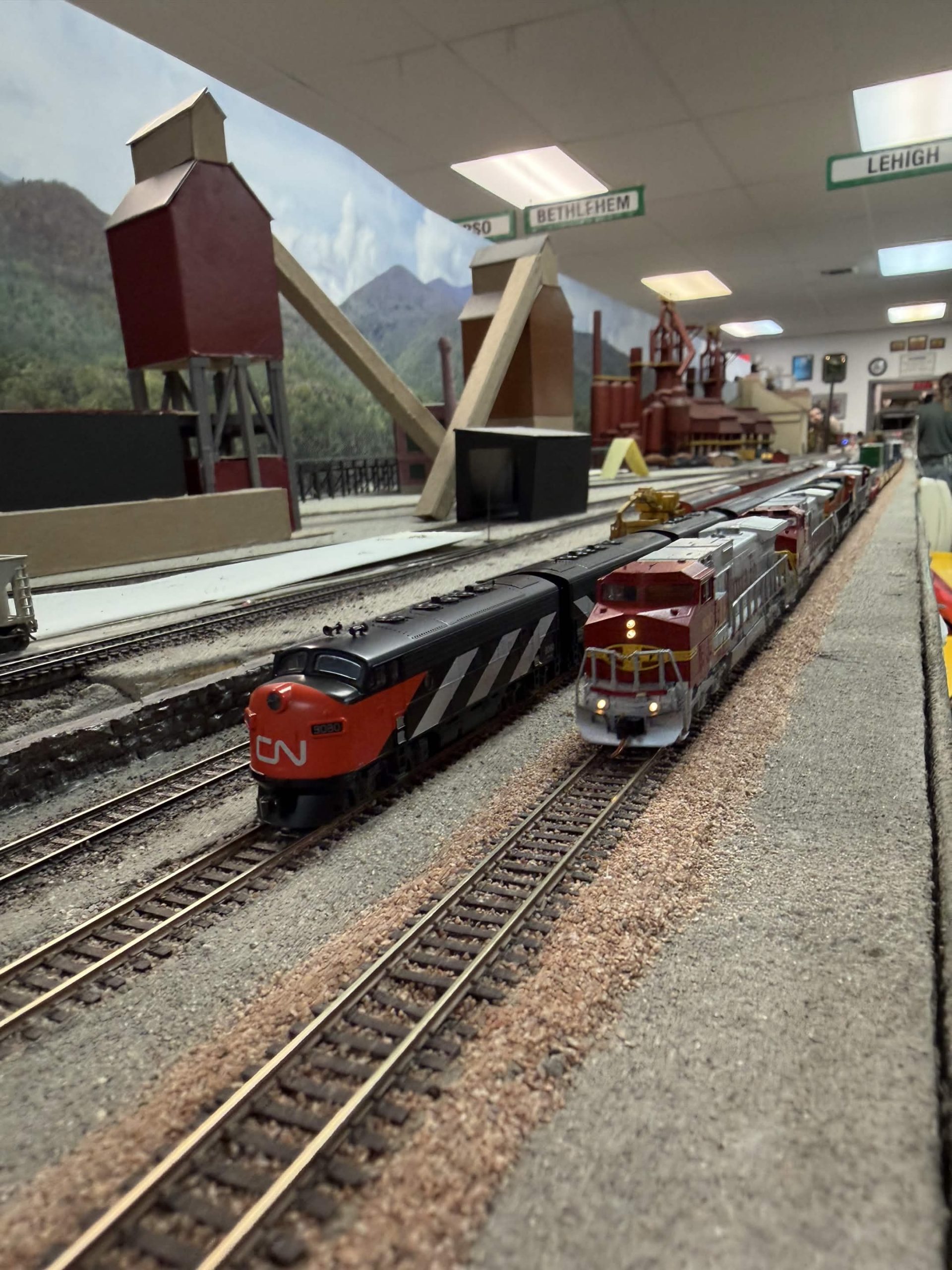
As I worked the furnace, I saw 97 held on a red for some passing freight. Apparently it was some sort of bet between the dispatchers. Like God and the Devil and Job, I suppose (Pete F)
If you want a specific report and not this generic stuff, I myself worked two furnaces, shifted empty ore jennies and limestone hoppers to Calypso, ran two helpers up the hill and one LEM back down, and rescued four or five distressed crews. Oh, and I also had an engine short Hidden Spur pocket (damn Digitrax throttles). And all around me, most of the members were doing their best to operate in the bustling chaos that is ONT operations.
So count your blessings (as I did above). Sure, your choo-choo might have fallen off the track or someone said something that made you sad. But like the Transcontinental railroad, there is ‘Nothing like it in the world’.
Damn, but we’re huge!
>>>THIS BLOG WAS A BOOK IN ITSELF. MORE BOOKS DOWN THIS LINK!<<<
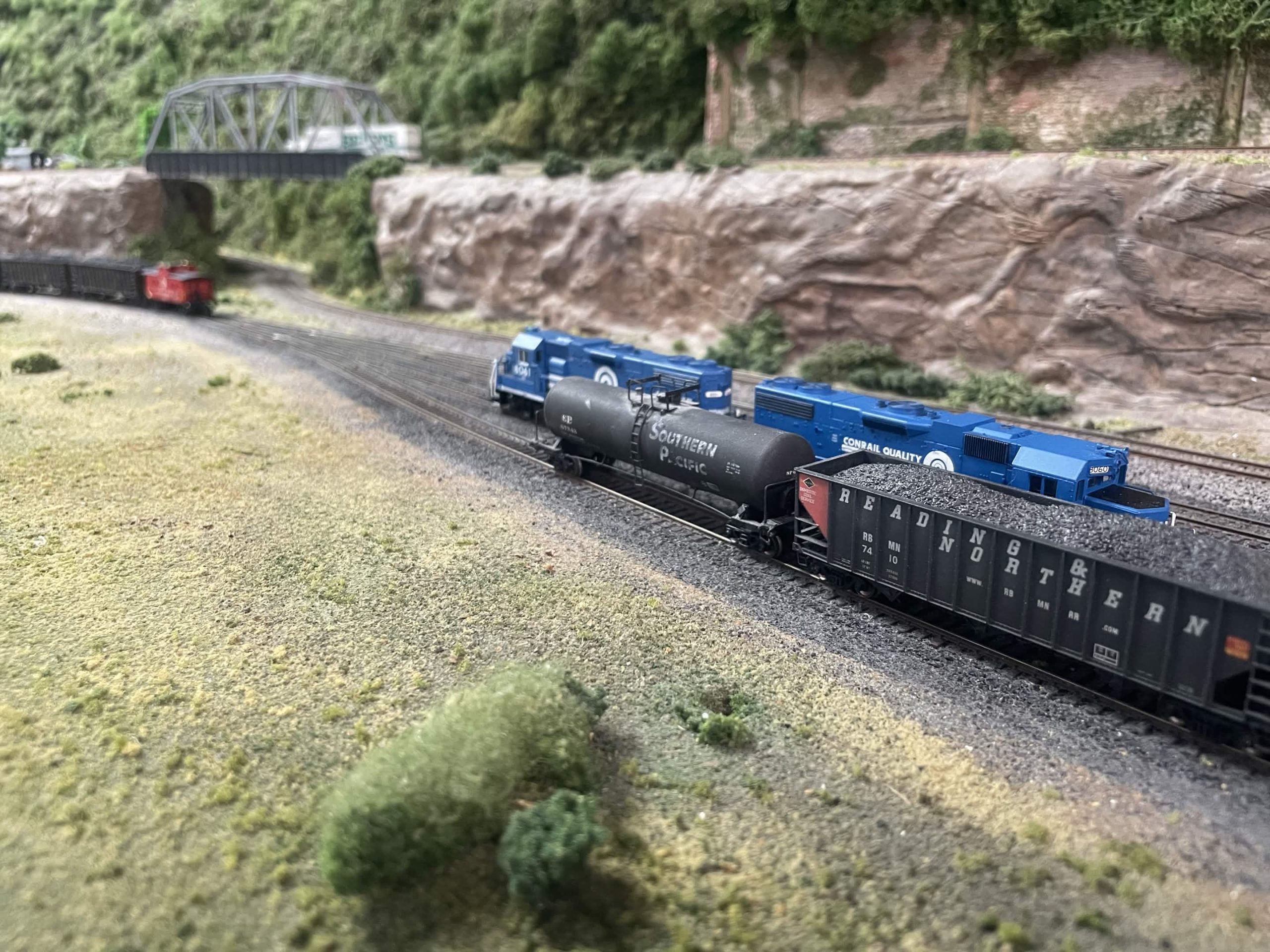
Mike surveys the ruins of Carbon Hill before working the Zanesville Turn there. You coal guys know better (Mike A)
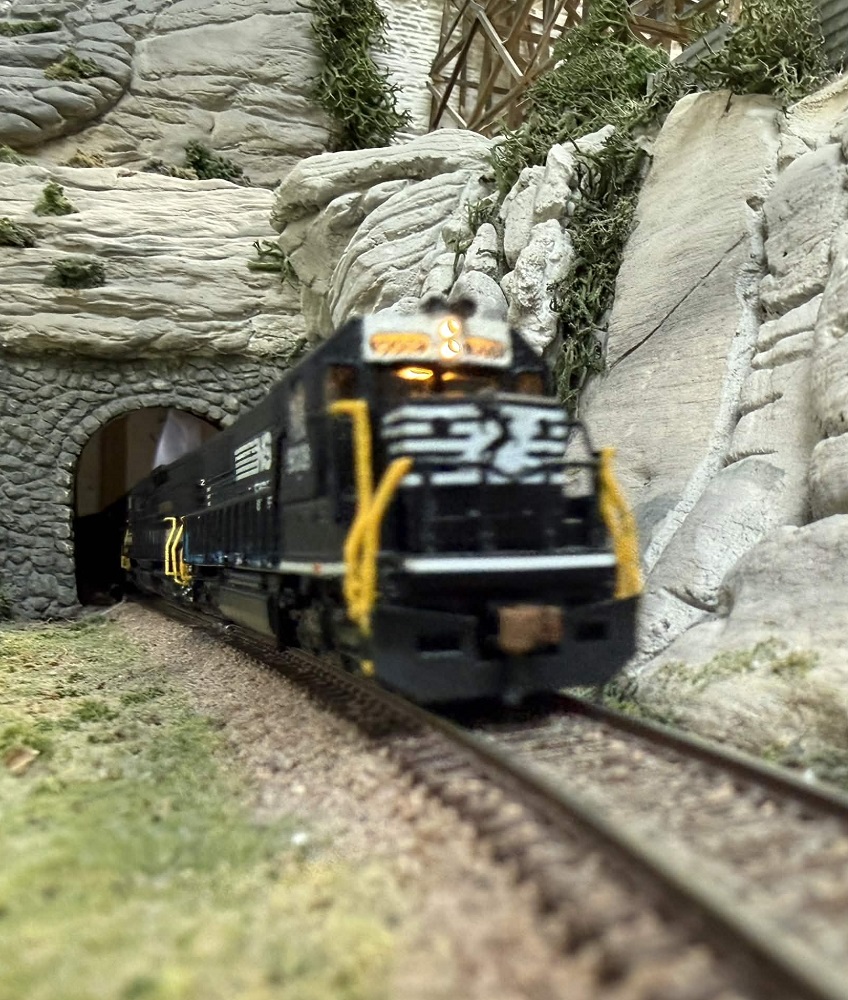
Okay, jokes over. Here’s 415, miles after I bailed off (Jim M again)
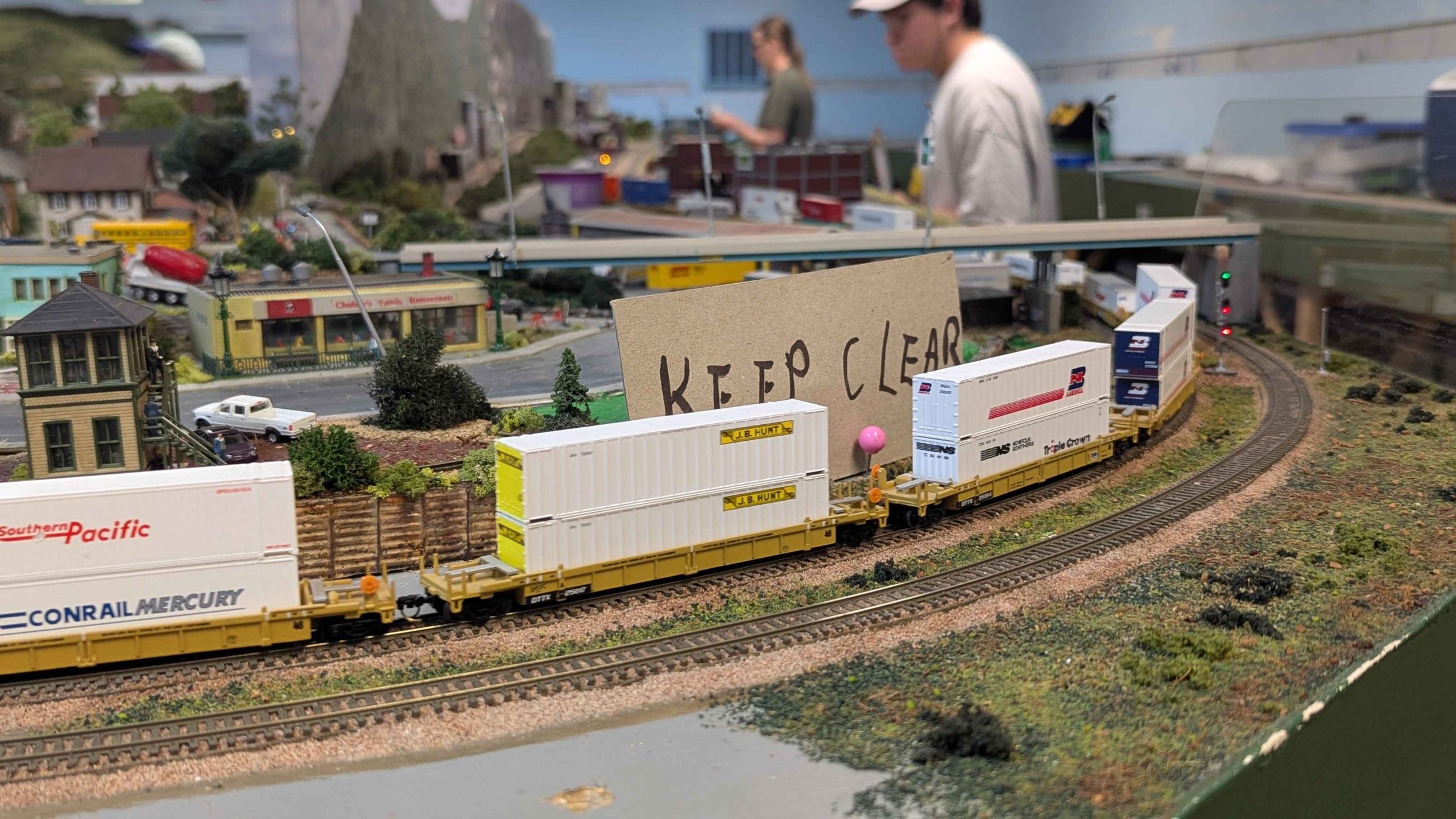
Anyone get the reference? (Kyle S)
Now?
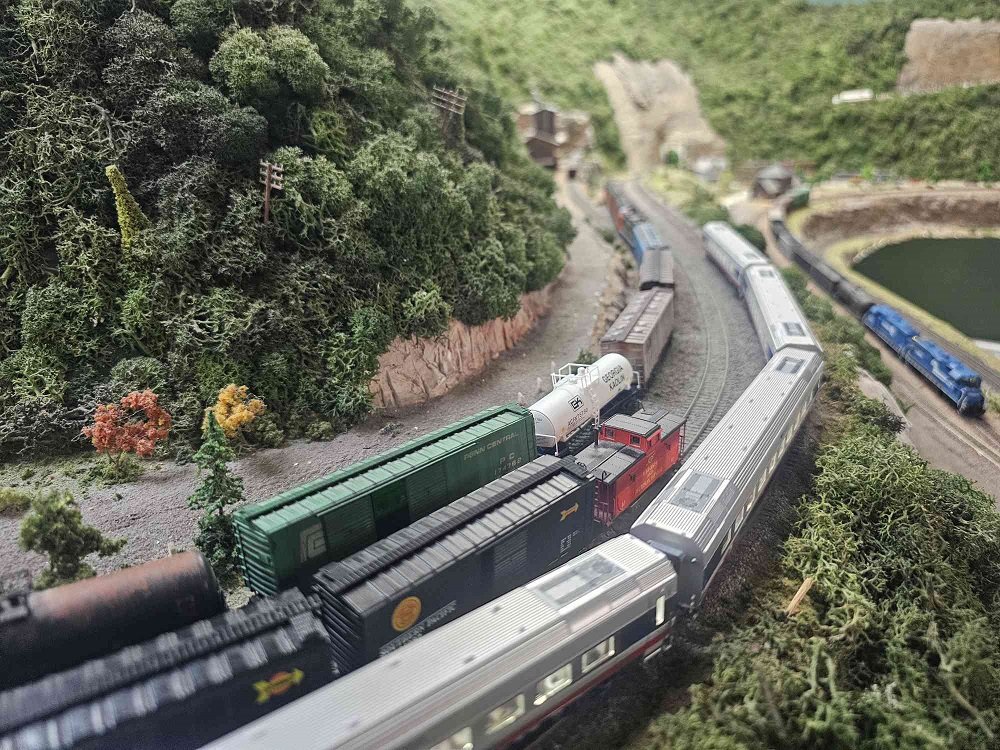
Usual dispatcher deliberate planning at Harris – Passenger Extra 4623 meets Fast Fright (sic) 271 meets long-overdue 244. In the valley below, Local 928 heads for home after a long, long day (John C)
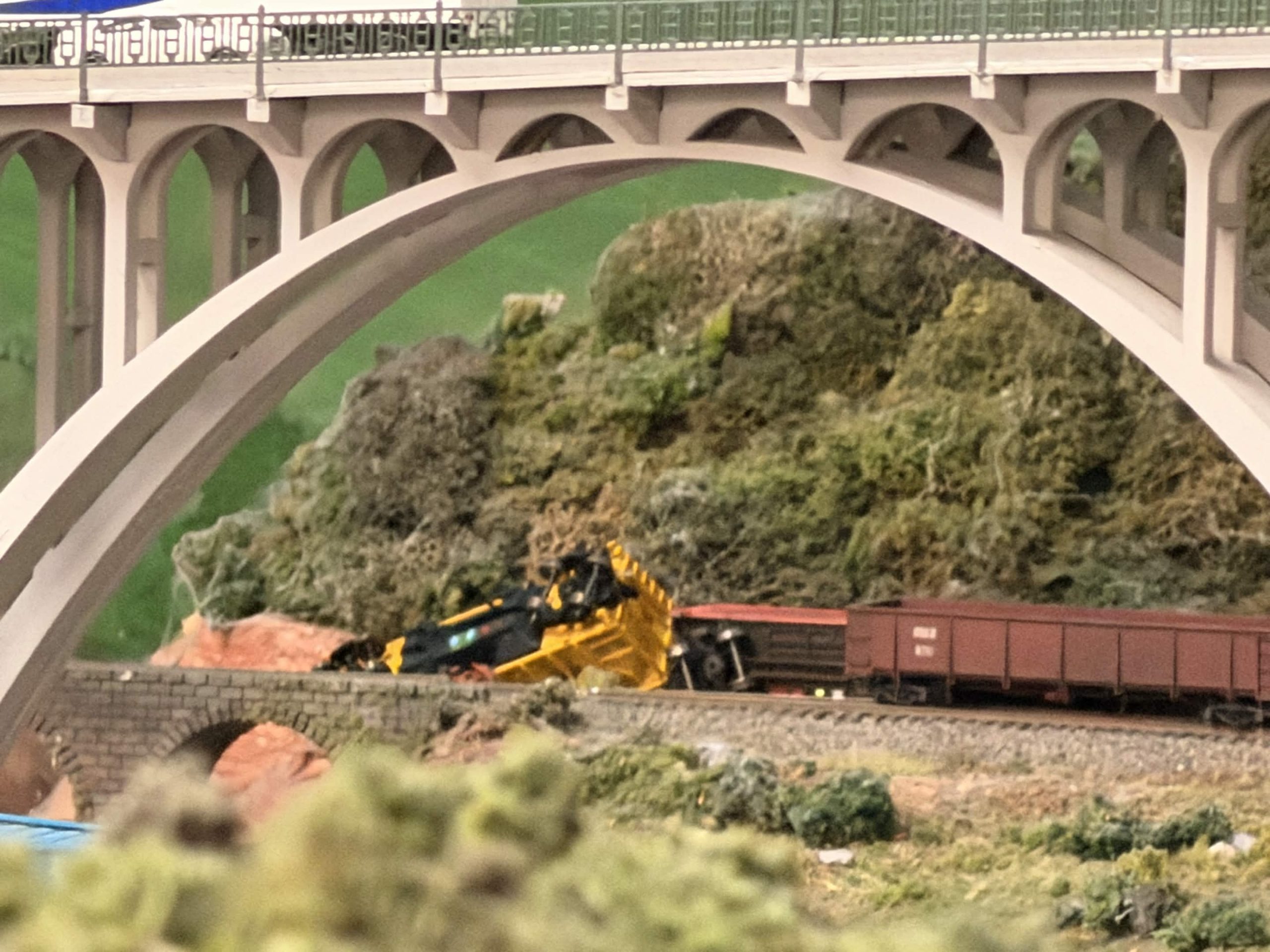
Faw down. Go boom. Call the hook… again (Pete F)